
The Squiggles.
On shadow, pattern, and perception.

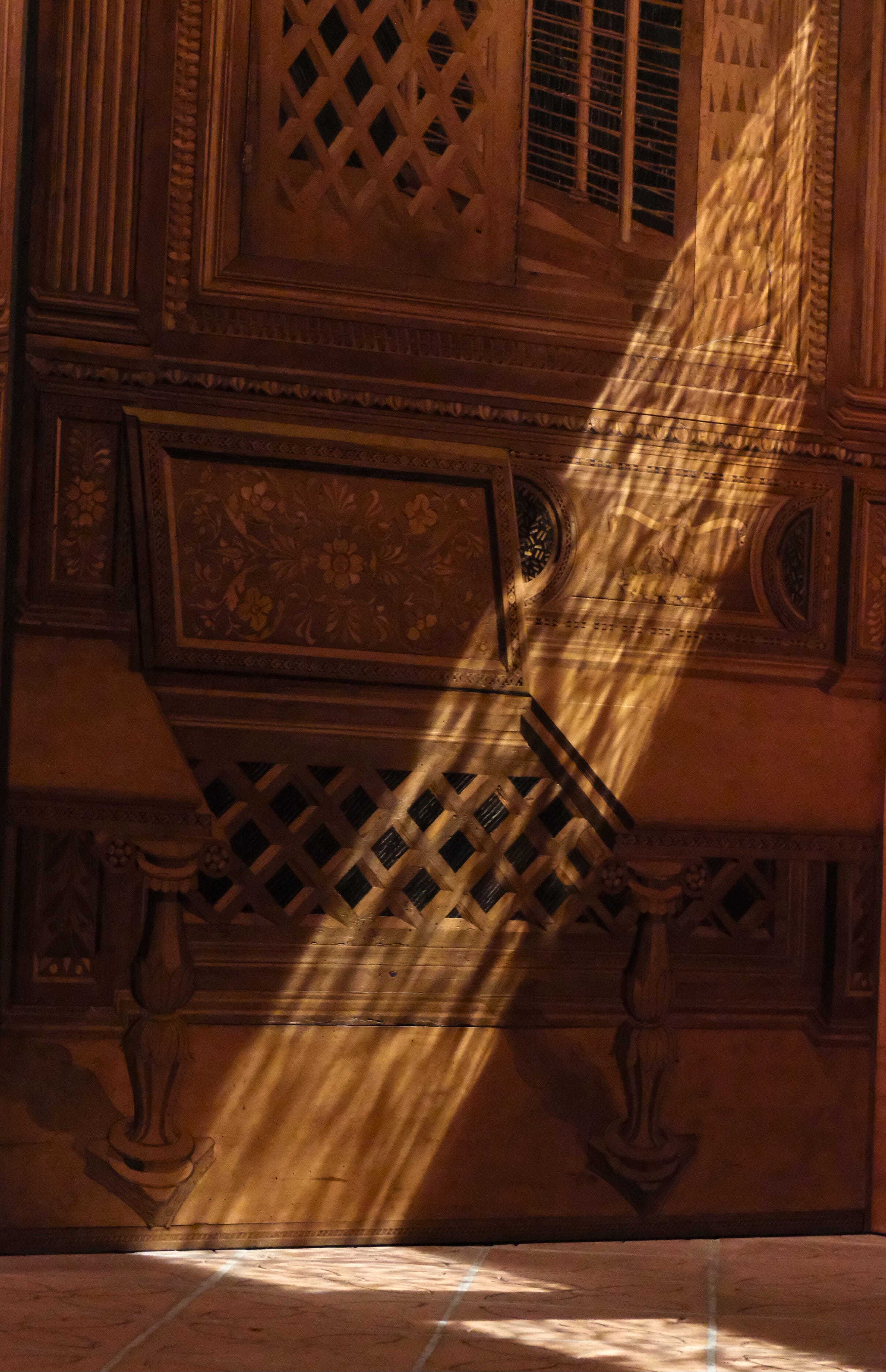
“Is that really art?”
I heard them whisper as they passed.
I broke my stare and began to wonder about the question that they asked.
When I look at art, I am often fascinated by the squiggles. The lines that hold rigidity in their brushstroke, but flow with no rhyme or reason. The kind that makes others pause and ask,
“Is that really art?”
My internal voice peeks out: Is it odd that I get it? That, to me, it feels like truth?
I shove it back down. Like that arcade game, sponge mallet to the gopher’s head.
Too much again, Mel. Too deep. Disguise into normalcy.
Today I went to the art museum.
There were many things I could not not see.
Not the pieces themselves, but the projections.
Those extensions of the art that stretched beyond their surfaces.
Cast by light, shaped by presence, blurred by those who passed through.
The shadows.
Do artists think about how their work will create an extension of itself, depending on where or how it is placed in the world?
What about the stories that will play in the minds of those who observe its presence?
Housed in the Iowa City Art Museum, the Karan-Wemba mask, tall and ornately decorated, flooded my mind with questions.
At the top, a poised and prominent figure stands.
Beneath, antlers stretch wide. Sharp, deliberate, powerful.
An oval face with hollowed eye cutouts anchors the center.
Its surface is clothed in intricate detail, painted in tones I imagine were made from plant dyes or soil.
The gallery’s green wall and careful lighting shape the experience.
The figure at the top stands like a fierce protector.
Behind her, a shadowed companion faces the opposite direction as if to say,
“I’ve got it back here.”
As I walked through the museum, the shadows held stock in my mind.
There is always more, I thought, beyond the projected lines.
I began to wonder about the stories that transcend, further from the objects that meet the eye.
The clay pots’ shadows made them appear bigger and bolder.
The male figure stands with his head slightly turned.
Positioned on the wall, his body casts a shadow.
No longer just one, three figures now stand side by side.
One literal, two figurative.
The points, curves, and accents of the sculptures and masks stretched and shifted, each taking on a personality of its own.
I saw a chorus of chatter and imagined their projected songs following me as I walked through the art museum today.
Are things what we make them?
What we imagine them to be?
Or what we are told they are?
How do we make sense of all that we feel, imagine, and see?
My mind catapults back, like that water balloon I once launched at the waterpark, to the words of those who never understood the squiggle.
I remember the feeling that arose:
A tug at the heartstrings.
A whisper from somewhere deep.
A part of me crying out for a place in this world.
That tug.
That whisper.
That cry.
Timidly raising its hand to say,
“I get it. To me, it is true.
It is real.
It makes sense.
It is profound.”
Making sense of the thoughts that rise in my mind can often feel like a scary, impossible feat.
My world.
My truth.
Heavy.
Maybe that is why the shadows spoke to me this afternoon.
Do we ever really know what is going on inside others?
The depths of their story? The dimension of their lives?
Unless we ask.
Hold space.
Try to know.
Do we even know the full extent of our own reality?
Life asks grandiose questions.
And I internalize the need for grandiose answers.
But what is meaning, what is sense, if not first rooted in the understanding of self?
Can we draw conclusions about the world if we do not first look inside?
Is Vermeer’s A Lady Writing not a mere whisper to its viewer:
It is you. In you. To you. For you. Through you.
The world tells us to make sense of what surrounds us.
But maybe art, maybe shadows, maybe language itself asks us first to make sense of what is inside.
Our presence.
Our consciousness.
And maybe, too, there is a story in the shadow we project into the world.
Just like the art hung on those gallery walls.
How others perceive, engage with, and internalize us.
My internal part peeks out again.
“We went there.
This time, we mean it.
This time, we will stand behind it.”
Life.
Art.
Words.
Meaning.
Is there ever only one way to make sense of it?
Or is it all a matter of perception that is always shifting?
As a fellow writer once told me,
“Everything is a squiggle, after all.”
A note from Melanie Jane
Hi there, thank you for being here.
In the summer of 2025, I had the honor of attending the Iowa Summer Writer’s Festival in Iowa City, Iowa. Under the guidance of Hope Edelman, we explored the theme Writing to Make Sense of the World. It was a deeply engaging week shaped by learning, conversation, and journals filled with pages of new work.
One afternoon, Hope took us to the Iowa City Art Museum where we were invited to sit with a piece of art that spoke to us and write from that place of attention.
The Squiggles emerged from that assignment.
Thank you, as always, for reading. I hope these words resonate, and I welcome your reflections if they do.
Note: The Karan-Wemba mask linked above is not the exact same as the one I saw in the museum and describe in this writing, but is the current one on display in their digital library. Thank you!
I enjoyed this so much. Yes to mark-making as art! It's hard enough being an artist without the block-heads out there fomenting even more doubt...